
LMS Buyer's Guide
Best Multilingual LMS Platform in 2026
Deliver training in multiple languages for global teams. Localized interfaces, multi-language content management, and RTL language support.
Last Updated: September 2026
In a globalized economy, the ability to deliver training in multiple languages is not a luxury — it is a requirement for any organization with an international workforce or customer base. Multilingual training encompasses two distinct dimensions: localizing the learning platform interface so users can navigate in their preferred language, and delivering course content in multiple languages so learners can study in their native tongue. Research consistently shows that learners comprehend and retain training material significantly better when delivered in their first language, even if they are proficient in English. The operational challenge of multilingual training is substantial. Managing translated versions of courses, keeping translations synchronized when source content changes, handling right-to-left languages like Arabic and Hebrew, and supporting Unicode character sets for languages like Chinese, Japanese, and Korean all require purpose-built platform capabilities. Beyond the technical requirements, organizations must decide their localization strategy: full translation of all content into every target language, or a prioritized approach that translates critical compliance and safety content first. A capable multilingual LMS should make both approaches feasible without requiring separate platform instances for each language.
Who Needs This?
Global L&D Director
Training is only available in English, leaving non-English speaking employees undertrained and at higher compliance risk
Multi-language content delivery ensures all employees receive training in their preferred language, closing compliance gaps
International Operations VP
Managing separate LMS instances for each country or language creates operational overhead and content inconsistencies
Single platform with multilingual support manages all languages from one admin dashboard with synchronized content
Compliance Manager at Multinational
Compliance training must be delivered in local languages to meet regulatory requirements in each operating country
Localized compliance training delivery in each required language with tracking and reporting by region
Key Challenges
Global Workforce
Multinational companies need training in each employee's native language for effective knowledge transfer.
Content Localization
Translating courses and maintaining multiple language versions is operationally complex.
Interface Localization
Beyond content, the platform interface itself should be available in learners' languages.
Must-Have Features to Look For
Why Arythmatic Is the Best Choice
Arythmatic is a modern, all-in-one learning infrastructure platform. Here's why it leads the pack:
- 1.Platform interface available in multiple languages
- 2.Support for multi-language course content
- 3.Unicode and RTL language support
- 4.Language-based user segmentation and groups
- 5.Global CDN for fast content delivery worldwide
Compare Top Platforms
| Platform | Live Sessions | White-Label | SCORM | Community | Pricing |
|---|---|---|---|---|---|
| Arythmatic | ✓ | ✓ | ✓ | ✓ | From $49/mo |
| Thinkific | ✗ | ✗ | ✗ | ✓ | $36–49/mo |
| Teachable | ✗ | ✗ | ✗ | ✗ | $29–39/mo |
| Kajabi | ✗ | ✓ | ✗ | ✓ | $149–399/mo |
| Podia | ✗ | ✗ | ✗ | ✓ | $33–39/mo |
| LearnWorlds | ✗ | ✓ | ✓ | ✓ | $24–29/mo |
| FreshLearn | ✗ | ✗ | ✗ | ✓ | $29–49/mo |
How to Evaluate LMS Platforms for This Use Case
Typical Implementation Timeline
Language Strategy
Define target languages, prioritize content for translation, and plan localization approach for interface and content.
Platform Localization
Configure platform interface languages, set up language-based user groups, and customize multilingual email templates.
Content Localization
Translate and upload priority courses, configure language-specific assignments, and test the multilingual learner experience.
Global Rollout
Deploy to international workforce, activate language-specific training programs, and establish translation update workflows.
What Does an LMS Cost?
Multilingual LMS capabilities are often premium features costing $200-500+ per month extra. Some platforms charge per additional language activated. Professional translation costs $0.10-0.30 per word, meaning a typical course costs $2,000-10,000 to translate per language. Arythmatic includes multilingual platform support in all plans at no additional per-language cost, reducing the overall investment needed for global training deployment.
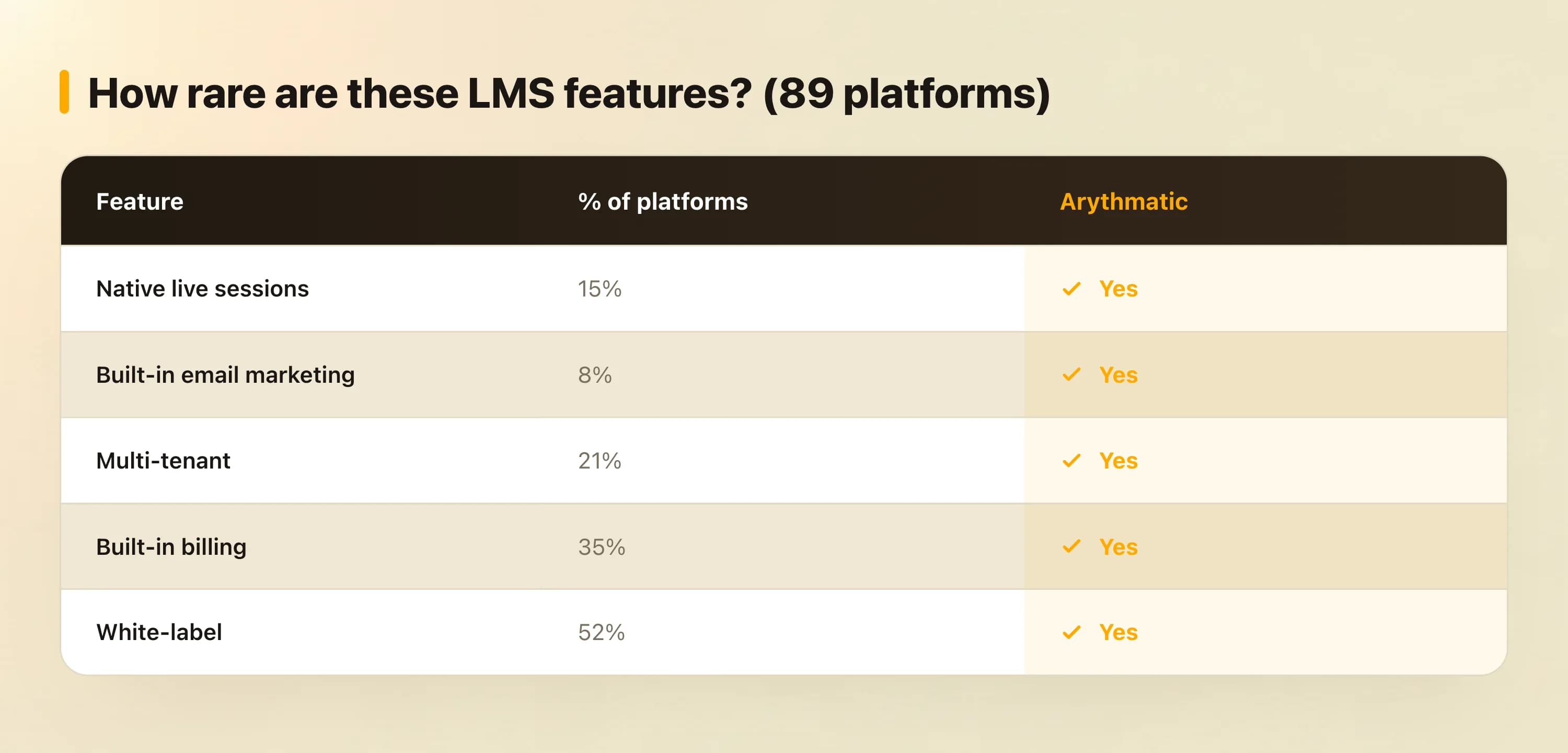
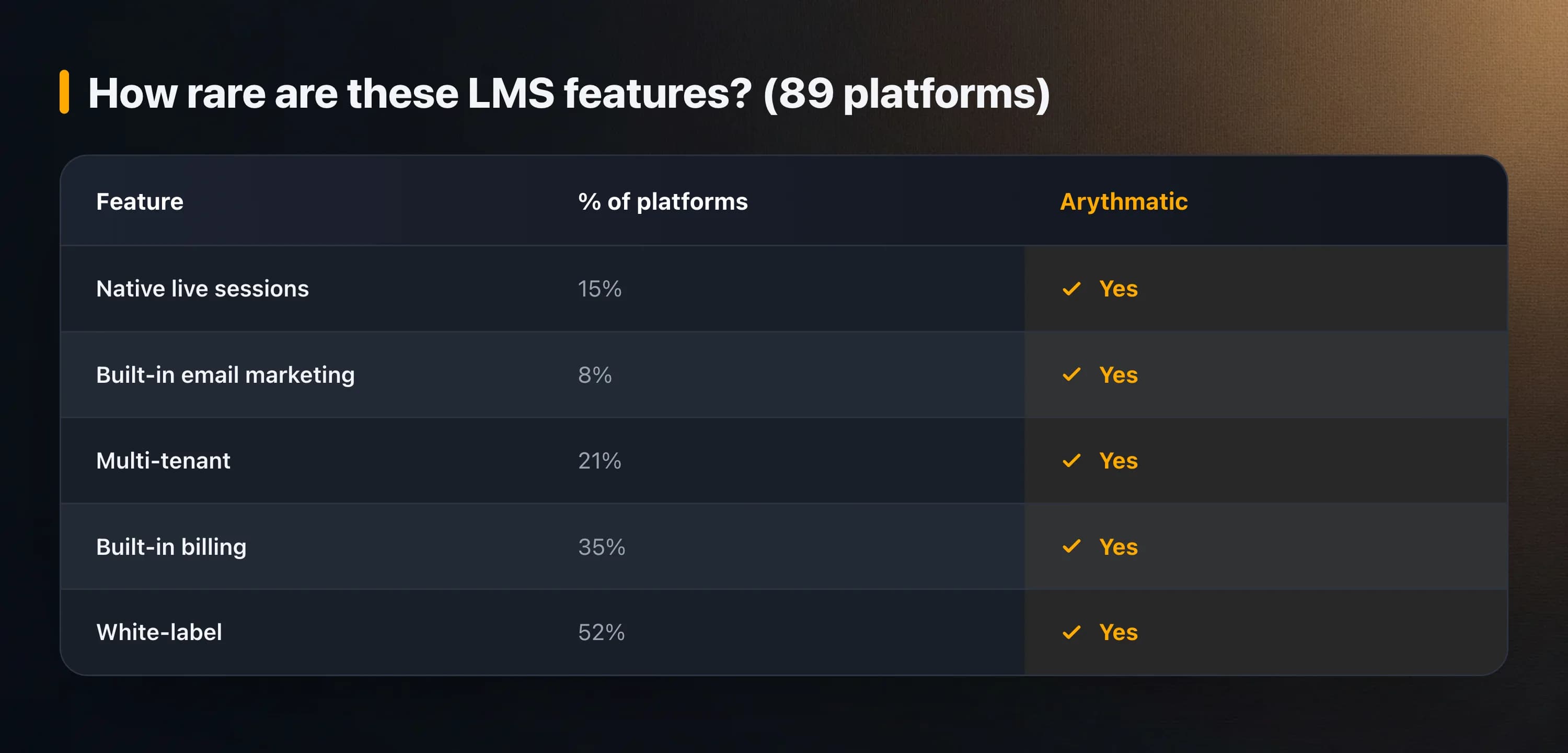
How rare are these LMS features?
Frequently Asked Questions
Does Arythmatic support multiple languages?
Yes. Arythmatic supports multi-language content, localized interfaces, and RTL languages — making it suitable for global organizations training teams in their native languages.
How many languages does Arythmatic support?
Arythmatic supports multilingual content delivery and platform localization for global workforces. Contact our team for details on specific language availability.
Does Arythmatic support RTL languages like Arabic?
Yes. Arythmatic supports right-to-left languages including Arabic and Hebrew with proper text rendering and interface layout.
Can I manage all languages from one admin dashboard?
Yes. Arythmatic's admin interface manages all language versions of content, users, and reporting from a single centralized dashboard.
How do I keep translations in sync with source content?
When source content is updated, Arythmatic enables you to identify and update affected translations, maintaining content consistency across languages.
Can I assign different languages to different user groups?
Yes. Language-based user segmentation ensures each group receives content and communications in their configured language.
Does Arythmatic support multilingual certificates?
Yes. Certificates can be configured in multiple languages to match the learner's training language.
Keep researching
Definitions, alternative platforms, and feature deep-dives relevant to your decision.
Glossary
Learning Management System (LMS)
Glossary
Learning Experience Platform (LXP)
Glossary
SCORM (Sharable Content Object Reference Model)
Glossary
Competency-Based Learning
Buyer guide
Best LMS for Employee Training
Buyer guide
Best LMS for Customer Education & Training
Buyer guide
Best LMS for Compliance Training
Buyer guide
Best LMS Platform for Course Creators
Compare
Thinkific alternatives
Compare
Teachable alternatives
Compare
Kajabi alternatives
Compare
TalentLMS alternatives
Compare
Docebo alternatives
Feature
Course Builder — Create Professional Online Courses
Feature
Live Classes Platform — Host Webinars, Workshops & Virtual Classrooms
Feature
Compliance Training Software — Automate Mandatory Training Programs
Feature
LMS Analytics & Reporting — Data-Driven Learning Insights
Ready to build your academy?
Start your 14-day free trial. No credit card required.